
The defining social media trends of 2026 are not subtle shifts. They are structural changes that affect how content gets made, discovered, and trusted. Short-form vertical video now commands 38.8% of social media managers’ top content priority, making it the single most prioritized content format across platforms in 2026. AI has moved from experiment to everyday workflow. And authenticity, once a buzzword, has become a measurable performance metric that separates brands audiences love from ones they scroll past.
Here is what that means for your strategy right now:
- Short-form and vertical video dominate across TikTok, Instagram Reels, YouTube Shorts, and LinkedIn
- AI tools accelerate content creation and experimentation, but audiences still reward human-feeling content
- Authenticity drives conversion more reliably than polished production
- Influence metrics are shifting from follower counts to ROI and audience alignment
- Social search is a primary discovery channel, especially for Gen Z
- Emerging platforms like Threads, Substack, and LinkedIn’s video feed offer untapped reach
- Private communities generate engagement rates that public feeds cannot touch
- Social commerce has crossed into mainstream buying behavior, with the global market exceeding $1.2 trillion
Each of these forces connects to the others. Understanding how they interact is where the real strategic advantage lives.
How cultural and attention shifts are reshaping what people want to see
Attention is the scarcest resource on social media right now, and the competition for it has gotten genuinely strange. Different generations are responding to completely different cultural signals, which means a one-size content strategy is more likely to miss everyone than reach anyone.
Generational content preferences in 2026:
- Gen Alpha gravitates toward chaos culture, absurdist humor, and the kind of nonsensical meme formats that feel deliberately unpolished
- Millennials and Gen Z find comfort in relatable work-life balance content, the kind that says “I see your exhaustion and I feel it too”
- Gen X, the generation with the largest spending power, is leaning hard into nostalgia, particularly ’70s and ’80s throwbacks that remix familiar cultural touchstones
Across all of these groups, the dominant emotional tone is “cozy” and “calming.” Audiences are actively seeking content that feels meaningful rather than addictive. That is a real behavioral shift, not just a vibe. The vast majority of Gen Z report wanting to spend less time on their devices, yet they keep scrolling. The content that wins is the kind that makes them feel like the time was worth it.
Paradoxically, short-form social series called micro-dramas are booming. Deloitte projects this format will generate $7.8 billion in revenue this year. These are episodic, serialized stories built natively for social platforms, and they are pulling in audiences who thought they were too burned out to care. The format works because it gives people a reason to come back, not just a reason to stop scrolling.
What this means for content strategy:
- Match your cultural reference points to the specific generation you are targeting, not a blended average
- Lean into calming, low-stimulation aesthetics if your audience skews Gen Z
- Build episodic content arcs that reward return visits
- Treat social fatigue as a design constraint, not just a mood
How AI is changing the way social content gets made

Speed is the new baseline in 2026. Brands are expected to respond to cultural moments almost in real time, and AI is what makes that pace possible without burning out every person on the team. The shift is not just about efficiency, though. It is about what AI enables creatively.
AI powers predictive analytics and rapid experimentation at a scale that was not realistic two years ago. Creative pattern analytics, which analyze pacing, hooks, and visual transitions in top-performing content, let marketers identify what is working and iterate faster than any manual review process could. The result is a tighter feedback loop between what you post and what you learn.
How AI fits into a modern social workflow:
- Drafting and ideation: AI generates first drafts, caption options, and post variations for human review
- Creative pattern analysis: AI identifies which hooks, formats, and visual styles are driving engagement
- Scheduling and optimization: AI tools like those integrated into Hootsuite recommend posting times and flag underperforming content
- Audience intelligence: AI clusters behavioral patterns that go beyond demographic personas
There is a tension here worth naming honestly. AI-generated content volume is rising fast. In 2025, AI-generated articles surpassed human-written content online for the first time. AI-native social platforms are emerging alongside this wave. And yet, the brands winning audience trust are the ones deliberately moving away from over-polished, AI-obvious content. Imperfections signal authenticity. A natural pause, an unscripted moment, even a minor stumble on camera, these things read as real in a feed full of content that clearly was not.
The practical takeaway: use AI to handle the volume and the iteration, but keep a human voice, face, and perspective at the center of what you publish. Consumers are turning away from what the industry has started calling “AI slop,” content that is technically competent but emotionally empty.
Why influence metrics are being completely rethought
The era of chasing follower counts is over. Not because follower counts stopped mattering entirely, but because they stopped predicting anything useful. A creator with 2 million followers and a disengaged audience delivers less value than an employee with 4,000 followers who genuinely believes in what they are sharing.
ROI is now the defining factor of creator partnerships and employee ambassador programs in 2026. Brands are asking harder questions before signing any creator deal: Does this person’s audience actually overlap with our buyers? Do they have a track record of driving action, not just impressions? Is this a one-off post or the start of an ongoing relationship?
The shift in how brands approach influence:
- Moving from one-off creator posts to long-term partnerships with consistent storytelling
- Building in-house content creator roles, where employees become the face of the brand
- Launching employee advocacy programs that extend reach while adding genuine credibility
- Tightening approval and governance workflows so content moves faster without losing brand consistency
Audiences trust people more than they trust faceless brands. They trust employees even more than they trust influencers or CEOs. That hierarchy has real implications. When a real person who works at a company shares something about that company, it lands differently than a sponsored post from someone who has never used the product. For a deeper look at what this shift means on the ground, Stacyknows has covered the reality of being an influencer in 2026 in detail.
The most forward-thinking brands are treating every employee as a potential content creator, not just the marketing team. That is a cultural shift as much as a strategic one.
What a winning content and brand strategy looks like in 2026
The brands gaining ground right now share a few things in common. They are not chasing every trend. They have a clear point of view. And they are building content that gives audiences a reason to come back, not just a reason to click once.
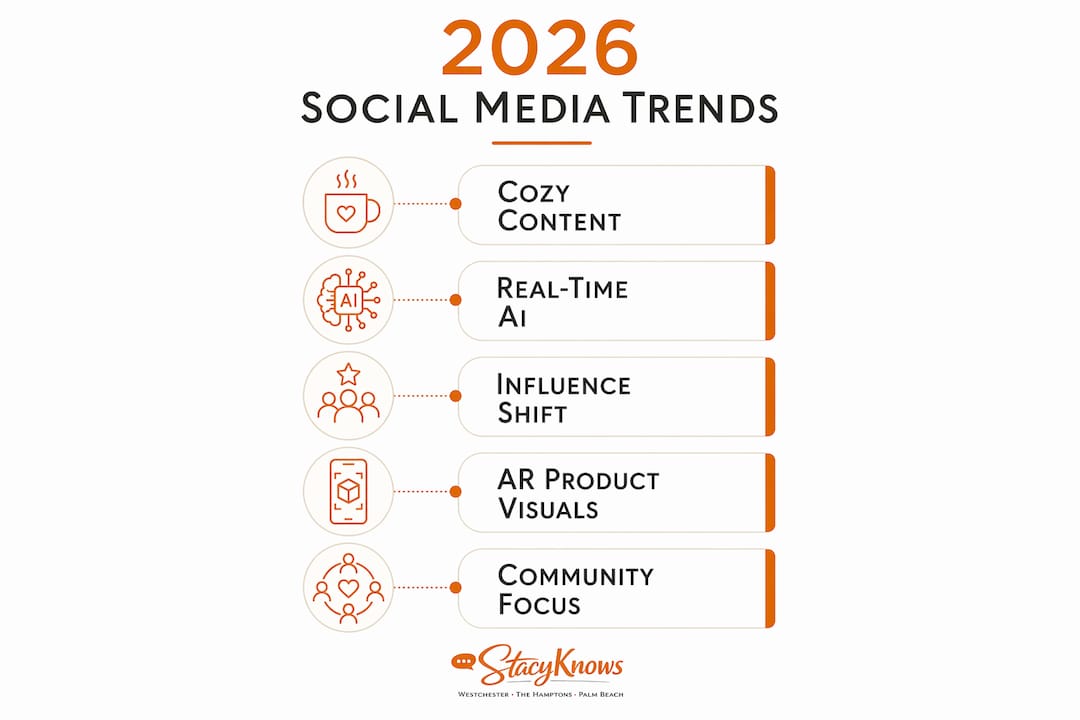
Episodic brand storytelling is one of the most underused tactics in professional marketing. Treating your social posts as chapters in an ongoing narrative, rather than standalone moments, builds the kind of familiarity that drives loyalty. Audiences get to know recurring characters, formats, and themes. That recognition is what keeps them coming back.
The “brand host” persona is a related idea. Instead of a faceless brand account, a real person, usually a social media manager or founder, steps on camera as the consistent human face of the brand. This approach builds trust faster than any production budget can. It also makes content feel personal in a way that polished brand videos rarely do.
Strategic priorities for 2026 content:
- Build episodic content series with recurring formats, characters, or themes
- Develop a brand host persona and put a real person on camera consistently
- Integrate shoppable features into video content wherever the platform supports it
- Treat social captions, alt text, and on-screen text as search metadata, not afterthoughts
- Build private communities on platforms like Discord or Facebook Groups to deepen relationships beyond public feeds
On social commerce: A significant portion of consumers bought directly through social media in 2025., and that behavior is accelerating. Live shopping events, shoppable Reels, and in-app checkout are no longer experimental features. They are table stakes for any brand selling a physical product. For more on why consumers are shifting toward online purchasing behavior, the pattern connects directly to social commerce growth.
Pro Tip: Use AI to generate five caption variations for every post, then have a human pick the one that sounds most like your brand. You get the speed of AI and the authenticity of a real editorial voice, without sacrificing either.
Social search deserves its own moment of attention. 49% of consumers and 65% of Gen Z now use TikTok as a search engine. Google has started indexing public Instagram content and short-form videos directly into its main search results. That means your captions, alt text, and on-screen text are functioning as SEO metadata whether you treat them that way or not. Generative Engine Optimization, or GEO, is the practice of writing social content in natural, conversational language that matches how people actually search. Hashtag stuffing does not cut it anymore. Writing captions the way a person would ask a question does.
Video is still the dominant format, and here is where each platform stands
Short-form video is the top content priority for 38.8% of social media managers in 2026. The format works because it matches how people actually consume content: quickly, on mobile, with the sound on or off. Understanding how each major platform handles video helps you allocate your production time and budget more precisely.
| Platform | Video Format | Max Length | Key Strength |
|---|---|---|---|
| TikTok | Short-form vertical | — | Primary social search engine for Gen Z |
| Instagram Reels | Short-form vertical | — | Strong discovery reach; Google-indexed content |
| YouTube Shorts | Short-form vertical | — | Backed by YouTube’s search authority; reaches Gen Z and Gen Alpha |
| Vertical video feed | Varies | Emerging format with professional audience; untapped engagement potential | |
| Threads | Short-form video | Varies | Organic reach advantage; growing to 400 million users |
For a closer look at what short-form video can do for a brand’s reach and conversion, the format’s advantages go well beyond entertainment. The music industry is already seeing this play out, with short-form video reshaping how music gets promoted in 2026.
Emerging platforms worth watching:
- Threads has reached 400 million users and rewards daily, platform-native content with organic reach that most established platforms no longer offer
- LinkedIn is entering what strategists are calling its “creative era,” with a new vertical video feed and a younger, more engaged audience than it had three years ago
- Substack has evolved beyond newsletters into a genuine social platform with feeds, profiles, and inbox features that function similarly to Threads or Bluesky
- Bluesky continues to attract users looking for an alternative to X, though its scale remains a fraction of the major platforms
- BeReal has expanded with RealPeople and RealBrands features, inviting brands like Adidas and Southwest Airlines to share unfiltered, real-time content with their audiences
The platforms worth investing in are not necessarily the newest ones. They are the ones where your specific audience is underserved by existing brand content, and where the algorithm still rewards early movers.
What Stacyknows sees in consumer and lifestyle trends affecting social media
From a lifestyle brand perspective, the most interesting shift in social media right now is not a platform feature or an algorithm change. It is a mood. Audiences are tired. Not disengaged, but genuinely fatigued by content that asks too much of them emotionally while giving too little back.
The rise of “anti-doomscrolling” platform models reflects this directly. Bond, a new social platform covered by TechCrunch, uses AI-powered memory archiving and personalized real-world engagement prompts to move users off the app and back into their lives. Its design philosophy is the opposite of legacy social media: instead of maximizing time on screen, it rewards users for doing things worth posting about. That is a meaningful signal about where consumer appetite is heading.
What this means for brands building social strategies:
- Low-friction, conversational storytelling outperforms high-production content for long-term community building
- Content that validates how people actually feel, tired, stretched thin, craving something real, lands harder than aspirational content that feels out of reach
- Creative pattern analytics give you a data-backed way to identify which emotional tones and formats are resonating, without guessing
- AI-assisted experimentation lets you test more variations faster, but the winning content almost always has a human quality at its core
Consumer trust is shifting toward genuine, humanized content at a pace that is hard to overstate. Audiences have developed a finely tuned sense for what feels real versus what was assembled by committee. The brands that acknowledge this, and build their content accordingly, are the ones building communities that last. For lifestyle blog topics resonating with Gen Z right now, the pattern is consistent: real over polished, specific over generic, personal over promotional.
How privacy regulations and consumer trust are changing the rules
Social platforms are sitting on enormous amounts of user data, and consumers are increasingly aware of that fact. The regulatory environment around data privacy has tightened considerably, and brands that treat data collection as a background activity are finding themselves caught off guard.
The practical shift is this: third-party data is losing reliability and legal standing, so platforms and brands are pivoting to consent-based first-party data. Lead generation ads, gated content, live events, and direct messages all provide direct signals about intent and interest, and they do so with the user’s awareness and agreement. That is a fundamentally different relationship than the passive data harvesting that defined the previous decade of social advertising.
For brands, this means building data strategies around value exchange. Give people a reason to share their preferences, their email, their interests. A well-designed quiz, a members-only community, or a live event with exclusive content can generate first-party data that is more accurate and more actionable than anything scraped from third-party sources.
Consumer trust is also being shaped by how transparently brands communicate about AI use. Audiences are not necessarily opposed to AI-generated content, but they respond poorly to content that feels deceptive about its origins. Being upfront about when and how AI is used in your content process is becoming a trust signal, not a liability. Brands that acknowledge the tool while centering the human perspective tend to land better than those that try to pass AI output off as entirely organic.
How AR and VR are finding their place in social media
Augmented reality has been a feature of social media for years, mostly in the form of Instagram and Snapchat filters. What is changing in 2026 is the sophistication of these tools and the expectations audiences bring to them. AR filters are no longer just fun overlays. They are becoming try-on tools, interactive brand experiences, and storytelling devices that blur the line between content and commerce.
For marketers, the most practical AR application right now is product visualization. Beauty brands, furniture companies, and apparel retailers are using AR to let consumers see how a product looks on them or in their space before buying. This directly addresses one of the biggest friction points in social commerce: the gap between seeing something and trusting that it will work for you.
Virtual reality remains further from mainstream social adoption, but platforms are experimenting with immersive social spaces that go beyond flat video. Meta’s investments in VR social environments have not yet produced mass adoption, but they have established the infrastructure. The brands paying attention now are the ones who will have a head start when the behavior catches up to the technology.
The near-term opportunity for most marketers is AR, not VR. Branded AR filters on Instagram and TikTok are accessible to create, shareable by nature, and directly tied to product discovery. They also tend to generate user-generated content organically, since people share the experience of using them.
How social media analytics tools are keeping up with what matters in 2026
The metrics that mattered in 2020 are not the metrics that matter now. Follower counts and raw impression numbers have given way to engagement quality, audience alignment, and downstream conversion. The analytics tools that serve marketers best in 2026 are the ones built around this shift.
Hootsuite’s analytics suite has evolved to surface creative pattern insights alongside traditional performance data, helping teams understand not just what performed but why. Tools that integrate social listening with performance analytics, such as Brandwatch Consumer Intelligence AI, give brands a near-real-time view of how their content is landing in the broader cultural conversation, not just within their own follower base.
The most useful shift in analytics thinking is moving from post-campaign review to in-flight adjustment. Social listening tools powered by AI can surface micro-shifts in audience sentiment as they happen, allowing brands to adapt messaging before a campaign runs its full course. That kind of responsiveness was not practically possible at scale three years ago.
For teams managing multiple platforms, the priority is consolidating data into a single view that connects content performance to business outcomes. Hootsuite, Sprout Social, and similar enterprise platforms all offer dashboard-level reporting that ties social metrics to CRM data. The goal is not more data. It is clearer lines between what you post and what it produces.
What to prioritize in your analytics setup:
- Track engagement rate by content type, not just overall account engagement
- Monitor social search performance separately from feed performance
- Connect social data to your CRM to measure downstream conversion
- Use AI-powered social listening to catch audience sentiment shifts early
- Review creative pattern analytics monthly to identify what formats are gaining or losing traction
Community building and engagement strategies that actually work in 2026
Public follower counts are a vanity metric. Private communities are where real engagement lives. Engagement in private online communities reaches nearly 50% of members, compared to public feed averages ranging from 0.05% to 5%, a difference that highlights how much more active private groups are. That gap is not a rounding error. It reflects a fundamental difference in how people behave when they feel like they belong somewhere versus when they are broadcasting into a void.
Building a private community does not require a massive audience to start. It requires a clear reason for people to join and a consistent reason to stay. The most effective communities in 2026 are organized around a specific shared interest or identity, not just a brand. A beauty brand’s community works better when it is built around a shared skincare concern than when it is just a fan group for the brand itself.
Engagement strategies that are working right now:
- Host regular live events, Q&As, or behind-the-scenes sessions exclusively for community members
- Create content series that only community members get early access to
- Encourage member-to-member interaction, not just brand-to-member broadcasting
- Use direct messages and polls to gather input that shapes future content
- Recognize and feature community members publicly to reinforce belonging
The brands building the strongest communities are also the ones treating community management as a senior-level function, not an entry-level task. Responding to comments, facilitating conversations, and knowing when to step back and let the community lead itself are skills that take time to develop. For local influencer strategies that connect community building to real-world growth, the principles translate directly to social media community management.
Serialized content plays a big role here too. When a community knows that every Tuesday a new episode drops, or every Friday there is a live conversation, they have a reason to show up consistently. That rhythm builds habit, and habit builds loyalty in a way that viral moments simply cannot.
Stacyknows has more of what you love
If social media trends have you thinking about how lifestyle content connects with real audiences, you are in the right place. Stacyknows covers the full spectrum of what modern life looks and feels like, from beauty secrets worth knowing to wellness insights that actually hold up. The same authenticity that wins on social media is what Stacyknows brings to every piece of content it publishes. Stick around and explore.
Recommended
- The Reality of Being an Influencer in 2026 (No One Tells You This) – Stacyknows
- Lifestyle Blog Topics That Resonate With Gen Z in 2026 – Stacyknows
- New York Lifestyle Blogger: Who to Follow in 2026 – Stacyknows
- Why 2026 Favors Online Buying Over Traditional In-Person Experiences – Stacyknows
