
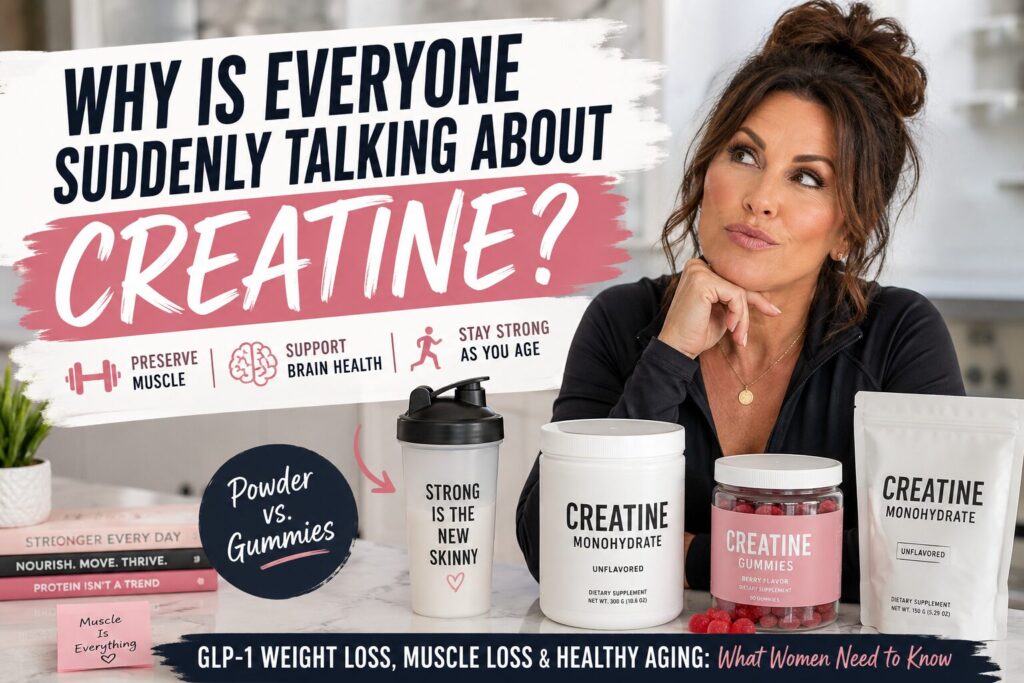
My Instagram feed has officially become one giant creatine commercial.
Every other Reel is someone stirring a mysterious white powder into water while promising stronger muscles, sharper thinking, better workouts, glowing skin, improved energy, and possibly world peace.
And honestly? I finally gave in and started paying attention.
As someone on a GLP-1 medication, I keep hearing the same thing over and over:
“Yes, you’re losing weight… but are you losing muscle too?”
Cue the panic.
Because apparently one of the biggest concerns with rapid weight loss — especially for women over 50 — is muscle loss. And once you hit a certain age, building muscle becomes harder than getting a reservation at Carbone.
So naturally, I went down the creatine rabbit hole.
My Algorithm Has Officially Become CreatineTok
At first, I thought maybe I was imagining it.
Then suddenly every scroll looked like this:
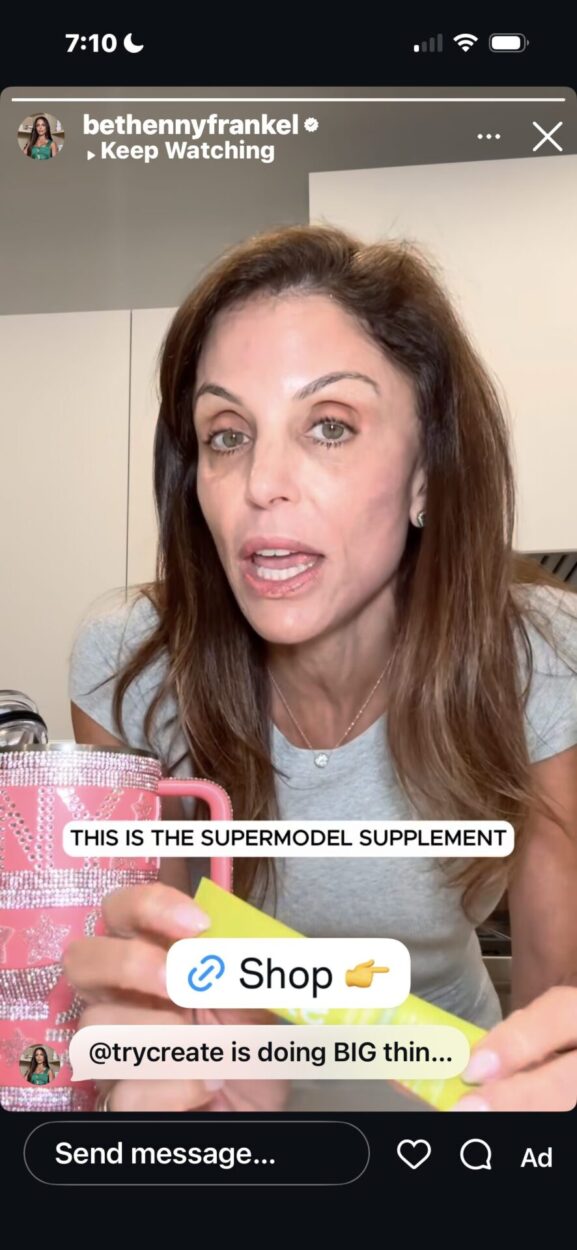
- Bethenny Frankel calling creatine “the supermodel supplement”
- Ads promising “No More Skinny Fat”
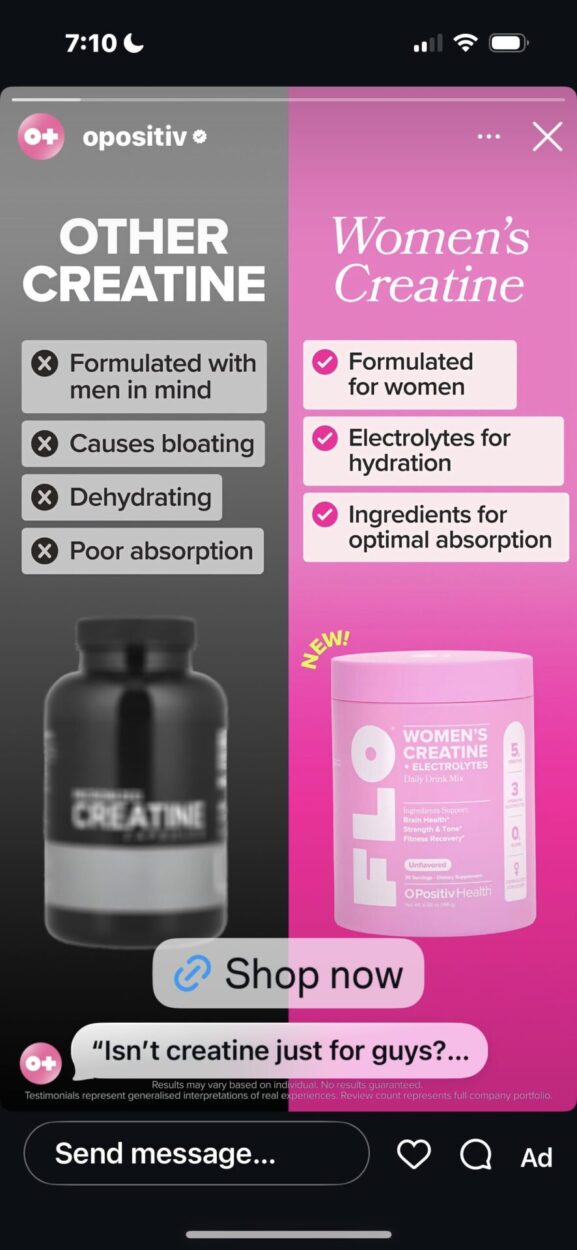
- “Women’s Creatine” in hot pink packaging
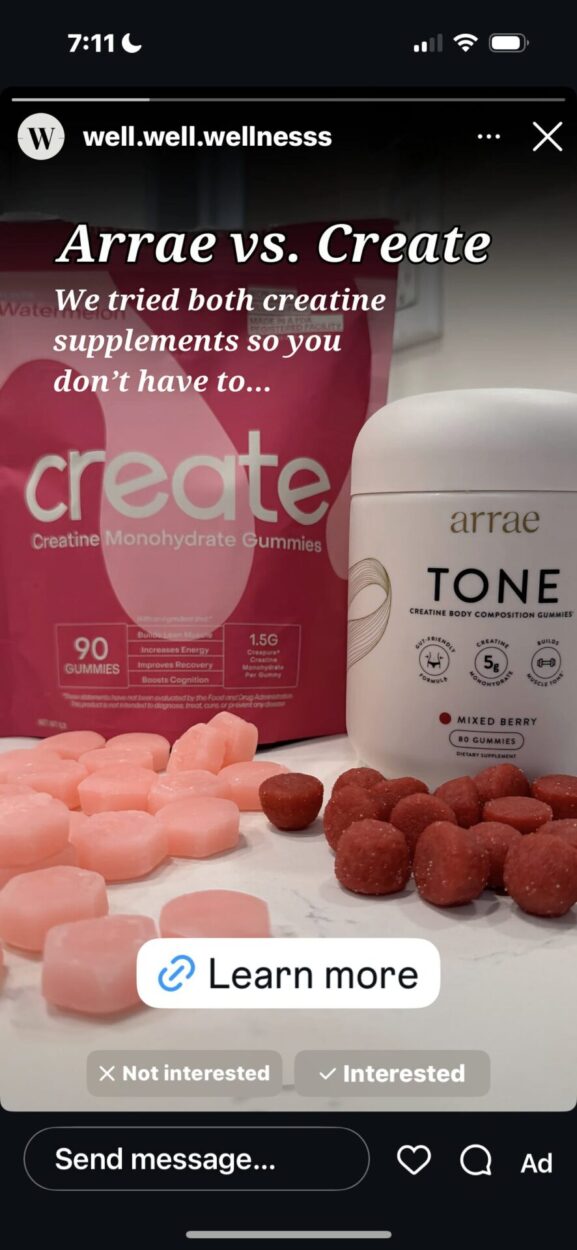
- Gummies claiming to help with strength, focus, recovery, hydration, and basically your entire personality
- Creatine comparisons like they’re luxury skincare reviews
Honestly, my feed has become one giant muscle-preservation panic spiral.
And the messaging is VERY specific:
Women over 50.
Women on GLP-1s.
Women worried about “skinny fat.”
Women trying to lose weight without losing strength.
At this point, Instagram knows I’m on Zepbound before some of my relatives do.
Here are just a few screenshots from my recent scrolling adventures:
And honestly? The marketing is working.
Because after seeing approximately 900 ads telling me I’m about to lose all my muscle mass unless I immediately buy watermelon-flavored creatine gummies… I finally started researching it.
Wait… Isn’t Creatine for Bodybuilders?
That’s exactly what I thought.
For years, creatine sounded like something only gym bros in string tank tops took while screaming through deadlifts.
But lately? Doctors, longevity experts, fitness trainers, and wellness creators are all talking about creatine for women — especially women over 50 and people taking GLP-1 medications like Ozempic, Wegovy, or Zepbound.
The conversation has shifted from “bulking up” to healthy aging.
And honestly, that got my attention.
Why Women on GLP-1s Are Suddenly Talking About Muscle
GLP-1 medications can be life-changing. I know firsthand how much they can help with weight loss and inflammation.
But here’s the thing nobody talks about enough:
When you lose weight quickly, you don’t just lose fat. You can also lose muscle mass.
That matters because muscle is incredibly important as we age. Muscle helps with:
- Strength
- Balance
- Mobility
- Metabolism
- Bone support
- Energy
- Independence as we get older
And if you’re over 50? Preserving muscle becomes even more important.
That’s why so many experts now recommend focusing on:
- Protein
- Strength training
- Resistance exercise
- And yes… possibly creatine
So What Exactly Is Creatine?
Creatine is a naturally occurring compound found in your muscles and brain. Your body actually makes some on its own, and you also get small amounts from foods like red meat and fish.
Its main job is helping your muscles produce quick energy.
In simple terms:
It helps support muscle performance and recovery.
And no, it does not automatically turn you into a professional wrestler.
Powder vs. Gummies: The New Wellness Debate
Now that my entire feed has turned into CreatineTok, I’ve also noticed another debate raging online:
Powder or gummies?
Because apparently we can no longer just take a supplement. We now need a full lifestyle identity around it.
Creatine Powder
This is the version most experts and fitness people still recommend.
Why?
- Usually contains more actual creatine per serving
- Easier to get the researched dose (typically around 3–5 grams daily)
- Often less expensive
- Usually fewer added sugars and fillers
- More options with simple ingredients
The downside?
Some powders taste chalky. Some don’t dissolve well. And if you’re already taking twelve other things every morning, scooping powder into a shaker bottle can start to feel like a chemistry experiment.
Creatine Gummies
These are basically the “I want wellness but make it candy” version.
The pros:
- Convenient
- Easy to remember
- Taste better
- Great for people who hate powders
The cons:
- Many gummies don’t contain enough creatine
- You sometimes need multiple gummies to equal one serving
- Often more sugar
- Usually more expensive per dose
And honestly? Some gummies feel more like marketing than science.
The Bigger Issue Nobody Talks About
No matter which version you choose, consistency matters more than whether it comes in a gummy bear shape.
The best supplement is the one you’ll actually take regularly.
The Benefits Everyone Keeps Talking About
The more I researched, the more I realized creatine isn’t just being discussed for fitness anymore.
People are talking about it for:
- Supporting muscle during weight loss
- Healthy aging
- Recovery after workouts
- Strength maintenance
- Energy
- Brain health and cognition
- Fighting frailty as we age
Some experts even call it one of the most researched supplements available.
Of course, the internet also thinks every supplement is magic, so let’s stay calm.
The Part Nobody on TikTok Mentions
Not everyone should blindly start taking supplements because a 24-year-old wellness influencer with perfect lighting says so.
If you have kidney disease, kidney concerns, or other medical issues, you absolutely need to talk to your doctor first.
And since I donated a kidney to my husband, trust me — I’m very aware that kidneys are not something to casually mess around with.
Also:
- Some people experience bloating
- Some people notice water retention
- Some brands are better than others
- And no supplement replaces actual strength training and proper nutrition
Unfortunately, there is still no powder that replaces squats.
I checked.
5 Creatines I Would Actually Try
If Instagram is going to show me creatine ads all day long, the least I can do is turn it into a research project.
After spending way too much time reading labels, watching videos, and being targeted by approximately 47 creatine ads a day, these are five creatine supplements that would make my shortlist.
I’m looking for products that are easy to take, have straightforward ingredients, and fit into real life — not just a bodybuilder’s routine.
As always, I’m not a doctor, and I’m not telling you what to take. I’m simply sharing what caught my attention as a woman over 50 who is focused on preserving muscle, staying strong, and getting the most out of life while navigating the world of GLP-1s and healthy aging.
If you’ve found a creatine you love, let me know. At this point, my algorithm and I are fully committed to this journey together.
What I’m Personally Learning
What fascinates me most is how much the wellness conversation for women has changed.
Ten years ago, women were told:
“Be skinny.”
Now the conversation is:
“Be strong.”
That feels healthier.
At this stage of life, I’m less interested in shrinking myself and more interested in:
- staying mobile
- protecting muscle
- aging well
- feeling energetic
- and maintaining quality of life
And honestly? That feels like a much better goal.
Final Thoughts From Someone Whose Feed Has Been Hijacked by Creatine Ads
Do I think creatine is a miracle? No.
Do I think it’s worth researching — especially for women over 50 and people on GLP-1s? Absolutely.
But as always:
Please don’t take medical advice from someone dancing in a sports bra on TikTok.
Even if her abs are incredible.
Talk to your doctor. Lift some weights. Eat your protein. Stay strong.
And if your algorithm has also become one giant creatine convention… welcome to the club.
