

The simplest way to start a weight loss journey is to pick one lifestyle habit you can keep for a year, not a diet you’ll quit in three weeks. Real, lasting change comes from small shifts that stack over time, not restriction that burns out by February.
Start today with these:
- Choose one food or activity habit to change this week (swap soda for water, walk after dinner).
- Schedule your first block of movement toward 150 minutes of weekly activity.
- Pick one tracking method, whether that’s a notes app or a simple journal.
- Weigh yourself once to set a baseline, then put the scale away for a week.
Pro Tip: Expect to lose 1 to 2 pounds a week. That pace feels slow, but it’s the one that tends to stick.
Why Even a Modest Weight Loss Journey Pays Off
You don’t need to hit a “goal weight” to feel the benefits. Losing even 5 to 10 percent of your body weight can lower blood pressure, improve blood sugar, and ease strain on your joints and heart.
- Lower risk for heart disease and type 2 diabetes
- Better sleep quality and more stable energy
- Improved mobility and less joint pain
Losing weight at 1 to 2 pounds per week supports muscle retention and long-term maintenance far better than crash diets. Small, steady wins compound. That’s the whole game.
How Do You Build a Step-by-Step Weight Loss Plan?
A plan works when it’s boring in the best way: repeatable, unglamorous, and easy to follow on a bad day. Here’s a sequence that holds up over months, not just a good week.
- Understand your why. Write down the real reason you want this, whether it’s your knees, your energy, or your kids. Vague motivation fades. Specific motivation sticks.
- Set SMART action goals. Instead of “eat healthier,” try “add a vegetable to lunch five days a week.”
- Track intake and activity. Logging food, movement, and sleep is one of the strongest predictors of who keeps weight off.
- Prioritize protein and fiber. Both increase fullness, which makes portion control feel automatic instead of forced.
- Build toward 150+ minutes of cardio weekly, plus two strength sessions. This combination protects muscle while you lose fat, which matters more than the scale number alone.
Meals and movement don’t need to be complicated:
- Swap white rice for a mix of rice and cauliflower rice
- Add a 15 minute walk after your largest meal
- Try “veggies first, carbs last” at dinner, a sequencing trick that can blunt blood sugar spikes and boost satiety
- Take the stairs, park farther away, or pace during phone calls for extra non-exercise movement
Your first week doesn’t need heroics. Try this instead:
- Day 1: Weigh and measure yourself once, then set the scale aside.
- Days 1 to 3: Log everything you eat, no changes yet, just awareness.
- Day 4: Plan three balanced meals for the coming week.
- Days 5 to 7: Schedule three walks or workouts on your calendar like real appointments.
Pro Tip: Habit stacking works better than willpower. Attach your new habit to one you already do daily, like drinking a glass of water right after you brush your teeth in the morning.
Environmental design helps too. Keep tempting snacks out of sight and reserve eating for the kitchen table instead of the couch. This won’t eliminate cravings, but it lowers how often cue-driven eating sneaks up on you. Drink water consistently through the day since thirst often masquerades as hunger, and it keeps energy steady during workouts.

If you’re considering supplements, treat them with skepticism first. Few have strong evidence behind them, and some interact with medications. Talk to a doctor or Registered Dietitian Nutritionist before adding anything, and prioritize sleep and stress management over pills every time.
What’s a Realistic Timeline, and When Do Plateaus Happen?
Aim for 1 to 2 pounds a week, or an early milestone of 5 to 10 percent of your starting weight. The first few weeks often move fast (water weight drops quickly), then progress slows into a steadier middle phase.
Plateaus are normal, not failure. They’re metabolic adaptation, your body adjusting to a smaller you.
- Recalculate your calorie needs at your current, lower weight
- Add variety to workouts to challenge your body differently
- Increase strength training if cardio has stalled results
See a clinician or RDN if you notice: rapid unexplained weight loss, fainting or dizziness, new symptoms, or medication side effects. For maintenance once you’ve reached your goal, aim closer to 300 minutes of weekly activity, since less movement is generally needed to lose weight than to keep it off.
What Mistakes Quietly Sabotage Progress?
Most derailments aren’t dramatic. They’re small habits that snowball.
- All-or-nothing thinking: one off meal doesn’t ruin a week. Get back on track at your next meal, not “Monday.”
- Ignoring sleep and stress: poor sleep disrupts hunger hormones. Set a consistent bedtime.
- Relying on one strategy: diet alone or exercise alone rarely works as well as combining both.
- Skipping tracking: even loose logging catches drift before it becomes a slide.
- Avoiding strength training: cardio alone can cost you muscle along with fat.
Setbacks are expected, not signs you’ve failed. The fastest way back is your very next meal or workout.
Should You Consider GLP-1 Medications?
GLP-1 medications have become a major part of the conversation around medical weight loss, and they deserve a clear-eyed look rather than hype or fear.
- They work by reducing appetite and slowing digestion, which can lead to significant loss for many patients
- Common side effects include nausea, digestive changes, and in some cases muscle loss alongside fat loss
- They require ongoing medical supervision and aren’t a permanent fix without lifestyle support
Before starting, ask a clinician about impact on muscle mass, expected treatment duration, monitoring needs, and interactions with other medications. Stacyknows has covered this in more depth, including why muscle and metabolism matter alongside GLP-1 use.
Pro Tip: Bring a written list of questions to your appointment. It’s easy to forget half of them once you’re sitting in the exam room.
For anything beyond general guidance, a clinician or RDN can personalize a plan around your health history.
A Human Take and Your First Week
Setbacks aren’t a detour from your weight loss journey. They’re part of it. The people who succeed long term aren’t the ones who never slip, they’re the ones who shrug and start again at the next meal. Progress rarely feels dramatic in the moment; it shows up months later when your jeans fit differently.
Try this for one week: drink a glass of water before each meal, take a ten minute walk daily, log your food without judgment, and go to bed twenty minutes earlier. That’s it. For a deeper roadmap, Stacyknows breaks down sustainable weight loss strategies built for exactly this kind of steady pace.
Where to Learn More
- CDC: Losing Weight for behavior-based basics
- Mayo Clinic: Weight Loss Strategies for habit-focused advice
- NIDDK Eating & Physical Activity Guide for maintenance data
- Stacyknows’ guide to wellness habits that support health and beauty
If you’re juggling a packed schedule, this flexible routine guide for busy parents offers ideas for fitting small habits into chaotic days, a strategy that translates well beyond parenting.
Frequently Asked Questions
How fast should I expect to lose weight?
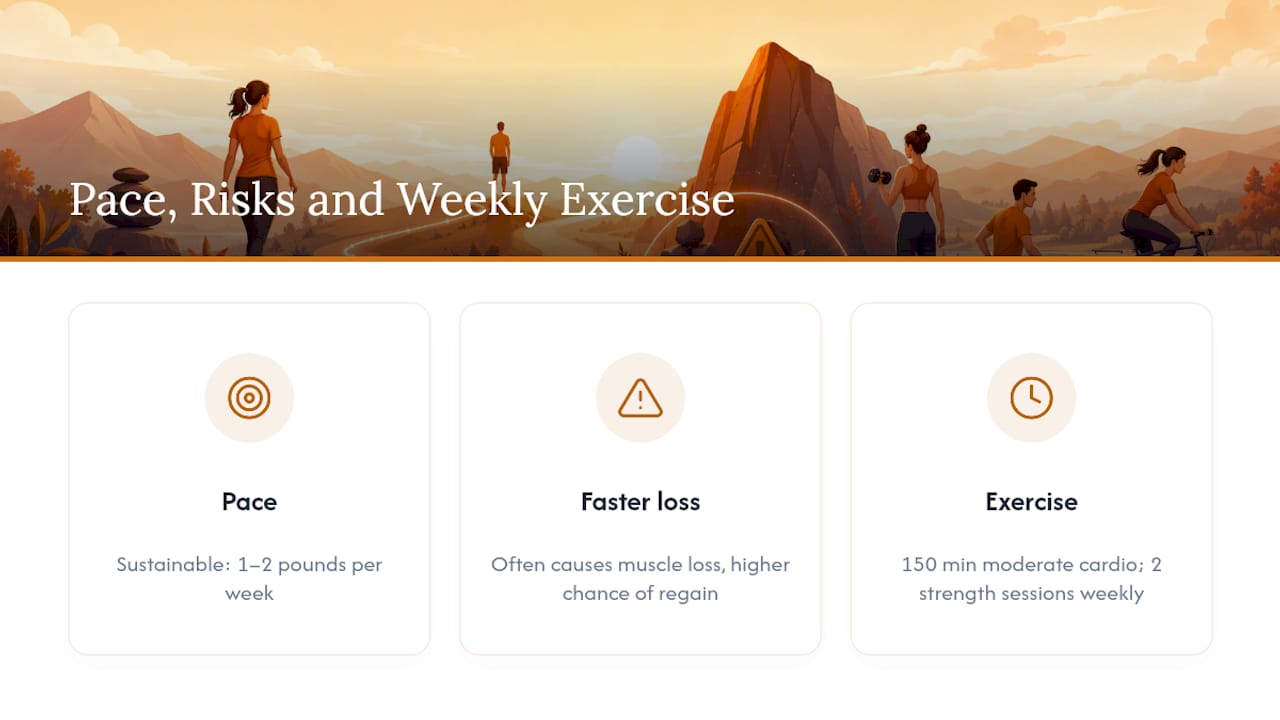
A sustainable pace is 1 to 2 pounds per week. Faster loss often means muscle loss and a higher chance of regain.
Do I need to exercise every day to lose weight?
No. Aim for 150 minutes of moderate cardio weekly plus two strength sessions, spread however fits your schedule.
What if I hit a plateau?
Plateaus are a normal metabolic response. Recalculate your calorie needs at your current weight and mix up your workouts before assuming something’s wrong.
When should I see a doctor about my weight loss?
If you experience rapid unexplained loss, fainting, new symptoms, or you’re on medications that might interact with major dietary changes, talk to a clinician or RDN promptly.
Are weight loss supplements safe?
Most lack strong evidence and some interact with medications. Check with a healthcare provider before trying any supplement.
This article is general information, not a substitute for advice from a qualified doctor. Consult a qualified healthcare professional about your own circumstances before acting on anything here.
Sources
- What does a healthy, realistic rate of weight loss look like — and why does it matter? | Harvard Health
- What exercise is right for me? | American Heart Association
- Losing weight | CDC
- Eating & physical activity to lose or maintain weight | NIDDK
- Weight loss: 6 strategies for success | Mayo Clinic
Recommended
- Effective Strategies for Sustainable Weight Loss – Stacyknows
- What to Expect on a GLP-1 Journey: Weeks 1 Through Maintenance – Stacyknows
- National Nutrition Month: Why GLP-1 Weight Loss Should Also Focus on Muscle, Metabolism, and Long-Term Health – Stacyknows
- GLP-1 Medications: What You Need to Know in 2026 – Stacyknows
